La Rota — The Sacred Sicilian Tradition of the Bride's Dowry

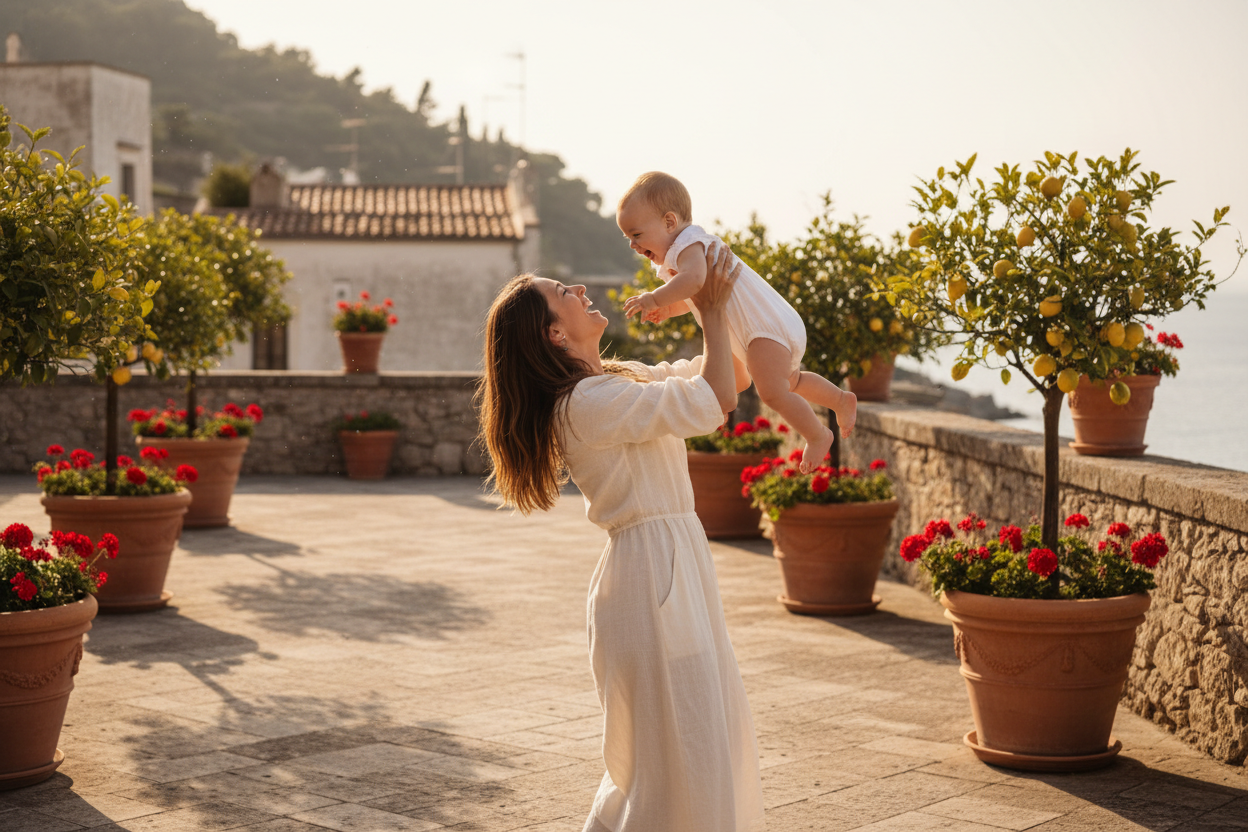
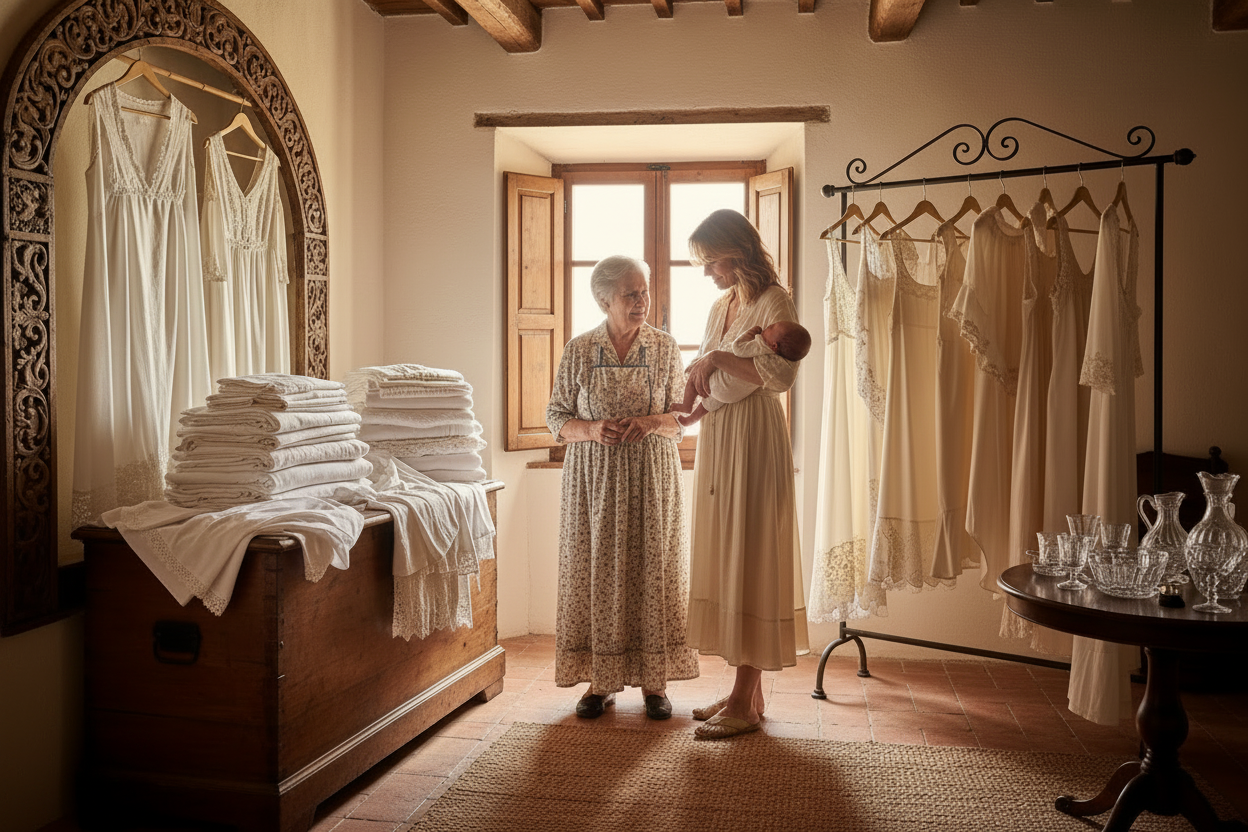
In Sicily, the arrival of a baby girl was not simply a joyful moment — it was the beginning of a lifelong labor of love. Before the infant had taken her first steps, before she had spoken her first word, her grandmother and mother were already at work. Quietly, steadily, with enormous pride and devotion, they began to gather the treasures that would one day form La Rota — the bride's dowry.
This was not something bought all at once in a flurry of pre-wedding shopping. La Rota was accumulated over years, sometimes over decades. A hand-embroidered tablecloth here. A set of fine china, carefully wrapped and stored, there. Linen bedsheets, silk nightgowns, crystal glassware, delicate towels — each piece chosen with intention, each one a thread in the story of a family's love for their daughter.
The Meaning Behind the Name
La Rota means simply — the wheel. And the name was no accident. When the time came to display the bride's dowry, the items were arranged in a circular formation throughout the rooms of her parents' home, so that family, friends, and the groom's family could move through the space easily, walking the full circle and taking in every tablecloth, every piece of china, every carefully folded linen along the way. The layout was intentional and gracious — everyone could see everything, nothing was hidden, and the walk itself became a kind of ceremony. You moved through the circle and bore witness.

Born the Moment a Daughter Was Born
The contents of La Rota were deeply practical and deeply beautiful at the same time — because in Sicilian tradition, there was no contradiction between the two. A home was a place of beauty, and a bride deserved to enter her new life fully equipped to create one.
Fine linen tablecloths, often embroidered with intricate floral patterns and needlework by hand, were among the most prized items. These were not everyday cloths — they were the kind laid out for Sunday dinners, for feast days, for the moments when a family gathered and the table itself became an act of love. Matching sets of napkins, carefully ironed and folded, accompanied them.
Bedding was another cornerstone — fitted sheets and pillowcases in the finest cotton or linen, bedspreads that might have taken months to complete. Nightgowns adorned with intricate embroidered florals and patterns were tucked away in cedar chests alongside towels and kitchen linens. Then there was the china. The glassware. The serving platters. A Sicilian bride did not simply bring herself to a marriage — she brought the infrastructure of a home, assembled piece by beloved piece over the entirety of her girlhood.

When La Rota Was Finally Revealed
After years — sometimes an entire childhood and adolescence — of quiet accumulation, came the moment the family had been working toward. Close to the wedding, the bride's family would lay everything out in their home. Every tablecloth unfolded. Every piece of china arranged. Every linen stacked and displayed in its full glory. And then the doors would open.
Family members and close friends would come to walk through and witness La Rota — not merely as spectators, but as participants in a communal act of affirmation. They were there to see the proof of a family's love and labor. They were there to honor the bride.
But the display served another crucial purpose: the family of the groom would also walk through. This was a moment of transparency and dignity on both sides. The bride's family was saying, clearly and proudly — our daughter does not arrive empty-handed. She is prepared. She is ready. And this is what we have given her.
There could be no misunderstanding, no later complaint, no looking down upon the bride. Everything had been laid bare, witnessed, and honored. In a culture where family reputation and the integrity of a marriage were bound together, La Rota was a social contract made visible in fine linen and hand-painted china.
I Saw It With My Own Eyes — In California
I am Sicilian, and I had the privilege of attending an actual La Rota event — not in Sicily, but right here in San Pedro, California. Sicilian families who had immigrated to the United States brought this tradition with them across the ocean, and for a time they kept it beautifully, faithfully alive. In the home of the bride's parents, just before the wedding, everything would be laid out exactly as it had been done in Sicily — the linens, the china, the glassware, all arranged in that familiar circular formation so that every guest could walk the full circle and take it all in.
But over time, as the younger generations became more Americanized, La Rota quietly faded. Bridal showers replaced it — fun, casual, modern. And honestly? We didn't want the work that came with those magnificent linens. Intricate embroidery requires careful handwashing. Fine linen tablecloths demand proper ironing. Those breathtaking bedspreads need to be stored with intention. We were busy. We were modern. We thought we didn't have time for all of that.
So the linens got folded up and put away. Stored in closets. Some forgotten entirely.

What We Lost — And What We're Rediscovering
Now, with more years and more perspective behind me, I see it differently. Those fine linens that seemed like such a burden? They were better. Linen sheets that actually breathe on a warm night. Tablecloths that transform an ordinary Sunday dinner into something that feels like a memory worth keeping. Embroidered florals and patterns that speak quietly but unmistakably of where you come from and who made you.
There is something deeply sad about a tradition that took generations to build — a grandmother's hours of embroidery, a mother's years of careful saving — being set aside because we were too busy to iron. And there is something worth examining in the fact that we traded all of that depth and beauty for convenience.
I think many of us, as we get older, begin to feel the pull of these things again. Not out of nostalgia alone, but out of genuine appreciation. We start to understand that our heritage is not a burden — it is a gift. And some gifts take a little more care than others.

More Than Objects — A Philosophy of Home
What makes La Rota so extraordinary is not the things themselves, but what the act of gathering them represented. In Sicilian culture, a home was not just a place to sleep — it was the center of life, the stage for every meal, every celebration, every grief, every joy. To give a daughter La Rota was to say: we trust you with this. We believe in the home you will create. We have been preparing you — and preparing for you — your entire life.
The tradition also bound generations of women together. A grandmother's hands had embroidered florals and patterns into a tablecloth that her granddaughter would unfold on her first Sunday as a wife. That cloth carried memory, skill, and love stitched into every thread. A dowry was never just objects — it was continuity. It was heritage made tangible.
Today, as Sicilian families carry these memories across oceans and generations, La Rota reminds us that the most meaningful things in life are not bought in a rush, but gathered slowly, with love, over a lifetime. Maybe it's time we started gathering again.

Carry the Tradition Forward
The grandmothers who built La Rota piece by piece over a lifetime cannot be replaced — and nothing sold in any shop today could come close to the love and labor stitched into those fine linens. But the spirit of giving a bride beautiful, meaningful things for her new home? That we can absolutely carry forward.
If you are celebrating a Sicilian bride, honoring your heritage, or simply want to give a gift with heart —
🍋 Italian & Sicilian Kitchen Essentials — Aprons, Towels, Cutting Boards and More
🏺 Italian & Sicilian Home Décor Collections
💍 Italian & Sicilian Wedding Gifts

Written by Leandra Andrews