Why Godparents Are Everything in Sicilian & Italian Culture
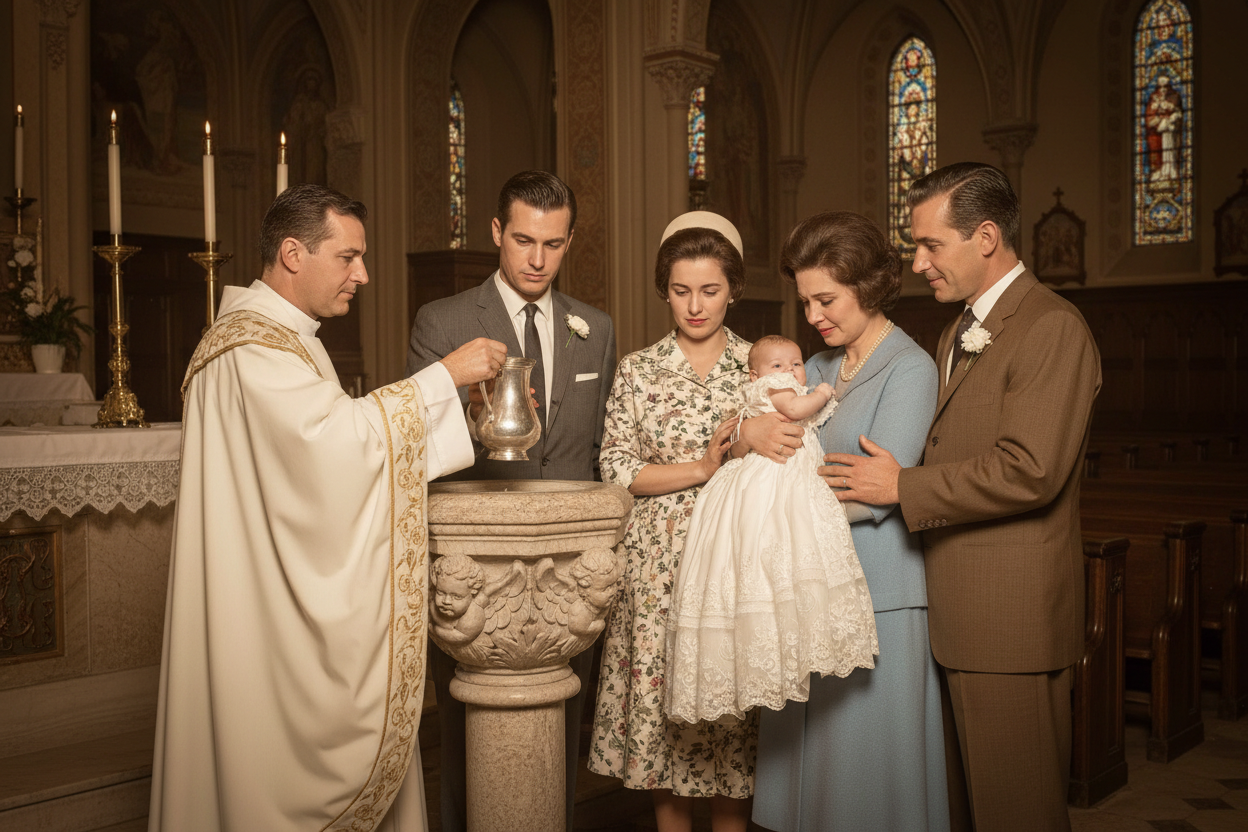
If you grew up in an Italian or Sicilian household, you already know — your godparents weren't just people who showed up at your baptism with a gift and disappeared. They were a second set of parents. A safety net. A promise made before God, the priest, and every single relative packed into that church. In our culture, being chosen as a godparent is one of the highest honors a family can bestow on someone. And it is not taken lightly. Not even a little.
Let me explain just how deeply this runs — because from where I grew up in San Pedro, California, in a community with roots as Sicilian as the sea itself, godparents weren't background characters. They were front and center. This is an Italian and Sicilian tradition that has been carried across oceans, through generations, and into every baptism, christening, First Communion, and confirmation our families have ever celebrated.

A Sacred Covenant, Not Just a Courtesy
In Italian and Sicilian tradition, the titles Compare and Commare carry more history than most people realize — and this is the part that often gets lost.
Compare (the godfather) and Commare (the godmother) didn't begin at the baptism. They began at the wedding. Literally translated, Compare and Commare mean witness — specifically, the witnesses of your matrimonial day. The best man stood beside the groom as his Compare. The maid of honor stood beside the bride as her Commare. These were the people who bore witness to the most sacred moment of your life together. And from that day forward, it was understood — almost without needing to be said — that they would become the godparents of the couple's first child.
The bond wasn't just honorary. It was a lifelong covenant between families. Once you were Compare or Commare to someone, that connection was woven into everything — Sunday dinners, holidays, milestones, sorrows. You didn't just gain a title. You gained an entire family, with all the love, obligation, and yes, occasional drama that came with it.
This tradition may be slowly vanishing in modern Italian-American families, which is exactly why it's worth remembering. In Sicilian dialect, these beloved titles sound even more like home: Compare becomes Cumpari, and Commare becomes Cummari. If you've heard those words exchanged between the older generation at a family gathering, now you know the weight they carry.
This is one of the most meaningful threads in Italian heritage and Sicilian culture. Choosing a godparent was never a social formality or a box to check before the baptism party. It was choosing a partner in raising a soul — someone already proven, already trusted, already loved. It was done with intention, with prayer, and probably a lot of conversation over espresso.
The godparent role extended well beyond the baptism day itself. A godfather was expected to be a moral compass, a protector, a presence. A godmother was a nurturer, a guide, a second mother in every sense. These weren't ceremonial titles — they were lived responsibilities that shaped the child and honored the famiglia.
Padrino & Padrina — and the Sicilian Twist
You've heard Padrino (godfather) and Padrina (godmother) — but here's something not everyone knows: in authentic Sicilian dialect, we say it a little differently.
In Sicilian, the "d" often softens or disappears entirely — you'll hear it in many Sicilian words. So:
Padrino → Parrino (godfather) Padrina → Parrina (godmother)
Growing up, I'd hear my parents say things like "Your Parrina and Parrino are coming over for coffee tonight" — and that was just normal conversation in our house. That's pure Sicilian, and it sounds exactly like home.
Growing up in a household where Sicilian was the language spoken between my parents and all four grandparents, these weren't foreign words to me. My mom is from Palermo, my dad from Terrasini — and when they talked about the Parrino or the Parrina, it carried weight. Real weight. That dialect was the sound of our Italian heritage being kept alive, right there in our kitchen in San Pedro.
This is why I love sharing these little pieces of Sicilian culture and language. So much of it gets lost over generations. Knowing that Padrino becomes Parrino in Sicilian dialect — that's not a footnote. That's a thread back to where we came from.

My Godparents: Anna Maria & Pasquale
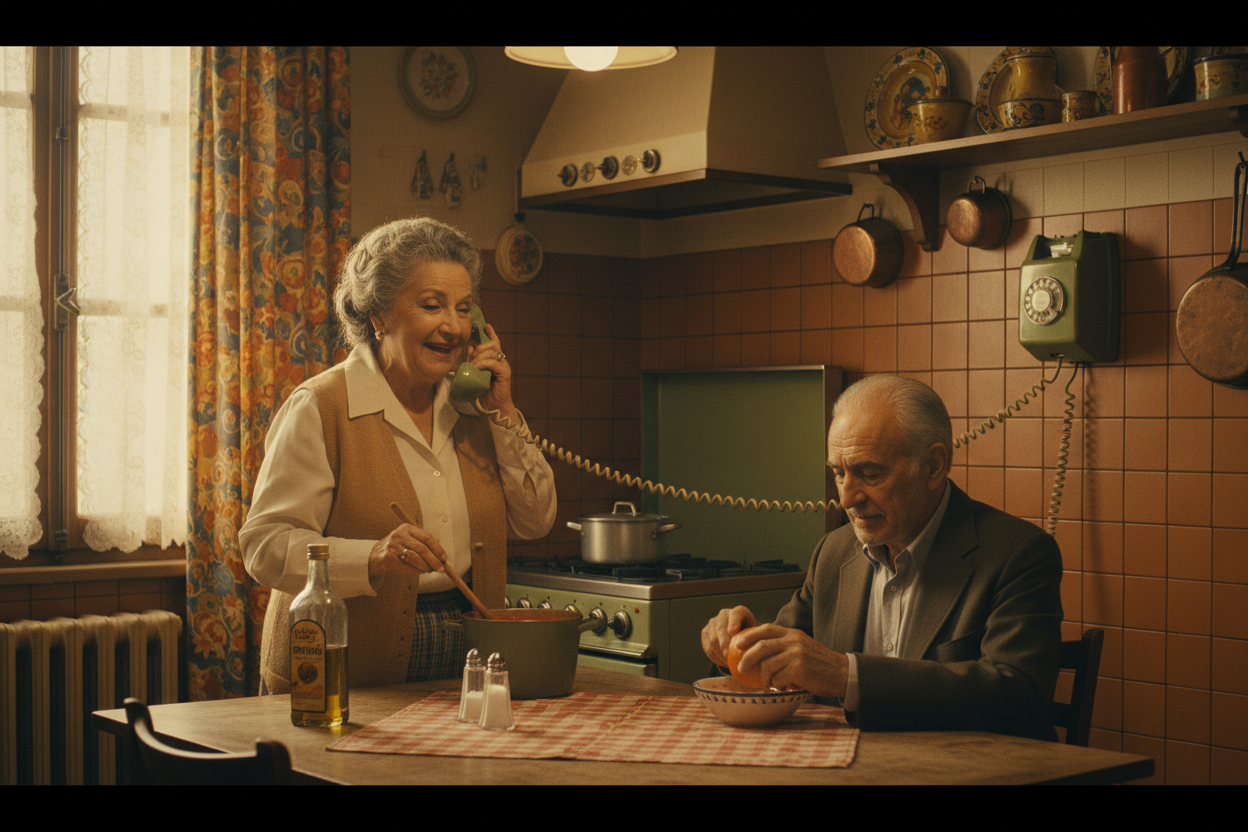
I have to tell you about my own godparents — Anna Maria and Pasquale — because they are the perfect embodiment of everything I'm describing. Like second parents to me. Absolutely devoted. Totally present in my life. And they argued. Constantly. Loudly. In the most gloriously Sicilian way.
When I was in Catholic school, the nuns told us something that lodged itself into my little kid brain: if your parents died, your godparents would raise you. This was said matter-of-factly, the way nuns say things.
So every single night, I prayed for my parents to live a very, very long time. I loved my Parrina and Parrino with my whole heart — but there was no way I could live in that house. Not because I ever doubted their love — it was enormous, unwavering. But the bickering? Next level. My parents were much quieter… I wasn't exactly prepared for that level of full-volume Sicilian "discussion" all the time.
That childhood mix of reverence, humor, and very practical kid logic has stayed with me. And I think it perfectly captures what godparents are in our culture — fiercely loving, dramatically present, and absolutely unforgettable.
Anna Maria and Pasquale showed up. For every occasion, every milestone, every Sunday. That's the thing about Italian and Sicilian godparents — they don't just phone it in. They are there. In your kitchen. At your table. In your life. Living the tradition the way it was always meant to be lived.
Why the Godparent Role Still Matters Today
Even in modern Italian-American and Sicilian-American families, the godparent tradition carries deep meaning. It's a way of saying: I trust you with the most precious thing I have. It's a declaration of chosen family within the already close-knit bonds of Italian heritage. And in a culture where family is everything — where Sunday dinners are sacred, where Nonna's word is law, and where you never let someone leave the house without eating — the godparent stands at the very heart of it all.
When someone in our community becomes a godparent, they step into something ancient and meaningful. They carry it with pride. And across Italian-American communities everywhere — from San Pedro to Brooklyn, from Chicago's Little Italy to the neighborhoods of New Orleans — this tradition remains one of the most treasured expressions of our culture.
The role of godparent in Italian and Sicilian culture is not just a religious one. It's a cultural one. A heritage one. It says: this child belongs to all of us, and we will all play a part in raising them right.
What Makes a Great Godparent Gift
When a Padrino or Padrina is named, the family celebrates. And part of that celebration — in true Italian and Sicilian fashion — is honoring them with something meaningful. Not just a card. Not just flowers. Something that says: we see you, we chose you, and this title means everything to us.
The best godparent gifts are personal. They carry the name, the title, the role. They live in the home or get worn with pride. A personalized gift that says Padrino or Padrina on it isn't just a nice gesture — it's a keepsake. Something that gets kept. Something that, years from now, the godchild might see on a shelf or in a photo and remember: that's who was there for me.
In Italian and Sicilian tradition, the godparent gift is typically given at the baptism or christening — but honestly? There's no wrong time. An anniversary, a birthday, or just because you want to honor the person who has always shown up for you. Any occasion is the right occasion to celebrate your Parrino or Parrina.
For Your Padrino & Padrina 🇮🇹
A little something to honor the most important people — because "thank you" is never quite enough, but a beautiful personalized gift comes close. Here are my favorite pieces from the shop, perfect for baptisms or confirmations, or just to say ti voglio bene to your godparent any day of the year.
Padrino & Padrina Etched Glassware — A beautiful set honoring both, perfect for toasting at the baptism or any special occasion.
Embroidered Padrino Hat — Classic, bold, and made to be worn with pride. A great godfather gift he'll actually use.
Personalized Padrino Hat — Take it one step further with his name — a keepsake he'll treasure.
Padrino Italian Flag Mug — Every morning espresso tastes better when the mug says who you are. 🇮🇹
Embroidered Padrina Hat — For the godmother who wears her title like the crown it is.
Personalized Padrina Hat — Add her name and make it truly hers — a godmother gift she won't find anywhere else.
Padrina Italian Flag Mug — Because every Padrina deserves a little Italian pride with her morning coffee.
Padrina Lillies - Personalized Godmother Gift Throw Pillow — Beautiful, feminine, and totally her. A personalized keepsake she'll display with pride in her home.
From my famiglia to yours — honor your Parrino and Parrina. They earned it. And if they argued a lot? That just means they loved you even more. 🧡

Written by Leandra Andrews